Bootcamp
Module 9 — Data modelling: the decisions you can't cheaply undo

Photo by Declan Sun on Unsplash
If the bootcamp had a centre of gravity, this was it. Screens can be rebuilt in a weekend; a wrong data model metastasises into every workflow, every screen and every report — and Will’s years as a data-focused solution architect before Momentum made this the module taught with the most conviction.
A data model is the set of decisions about what your application remembers: the types of things, the facts about each, and the relationships between them. It’s the only part of an app that gets harder to change the longer you build.
The theory arc
A simple approach to data modelling gave the method: list the nouns of the business, make them types, list the facts, make them fields. Then data types, normalisation (each fact stored once, referenced everywhere), common relationships (one-to-many and many-to-many, and how to choose), options for referencing data types, lists of fields and the trap of creating and storing lists, metadata, naming conventions (boring names are a professional signature), the data tabs where you inspect reality, documentation, and the schema-level view via the DRE — a database relationship exercise the course drilled twice, because reading a schema diagram fluently is a superpower interviews test for.
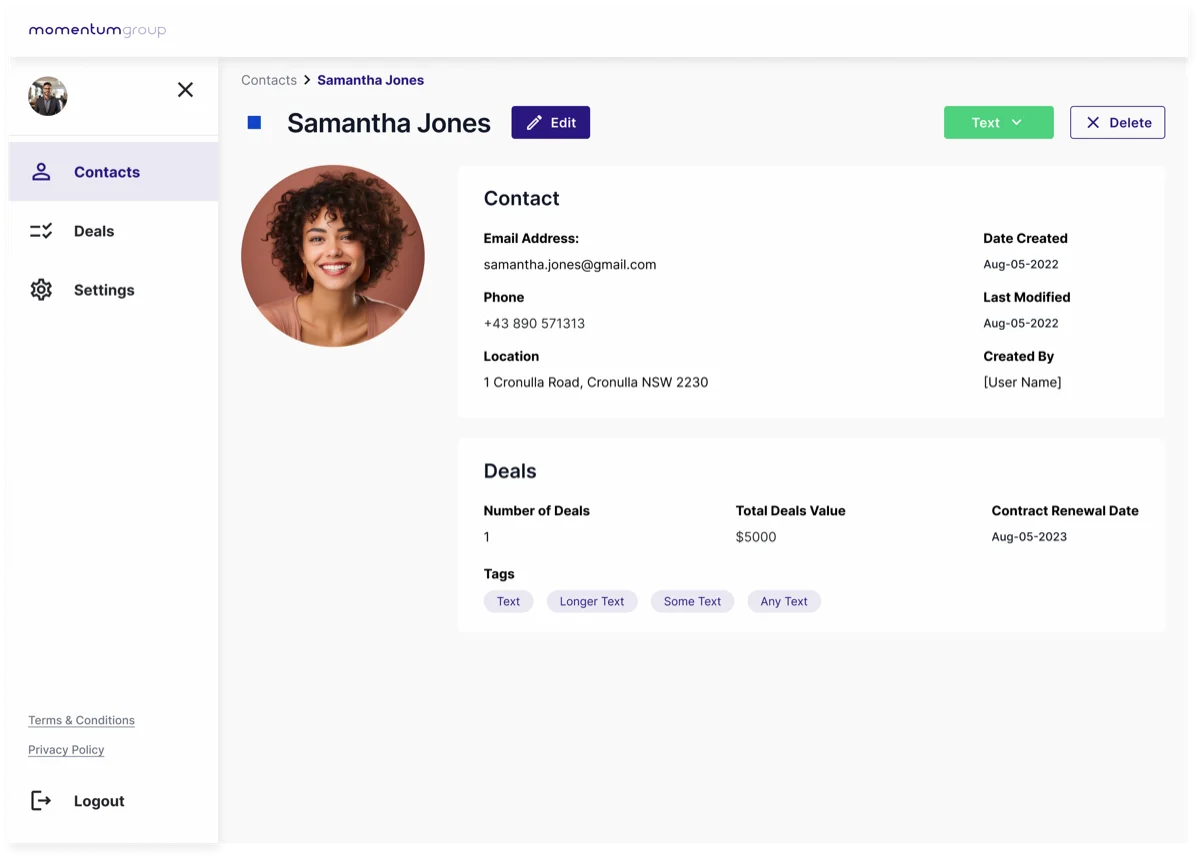 A data model made visible: a Contact record with its fields, and — below — the Deals related to it. That one-to-many relationship (one contact, many deals) is the decision the whole module turns on. From the course’s own design files.
The build: a kanban deal board
Then the model met reality: a CRM-style deal pipeline — updated database structure, board UI in two passes, a create/edit/delete popup, deals dragging between stages, re-sorting within a list, and an improvements pass. A kanban board is the perfect final exam for a data model: every card movement is a relationship update, and a wrong model turns drag-and-drop into agony.
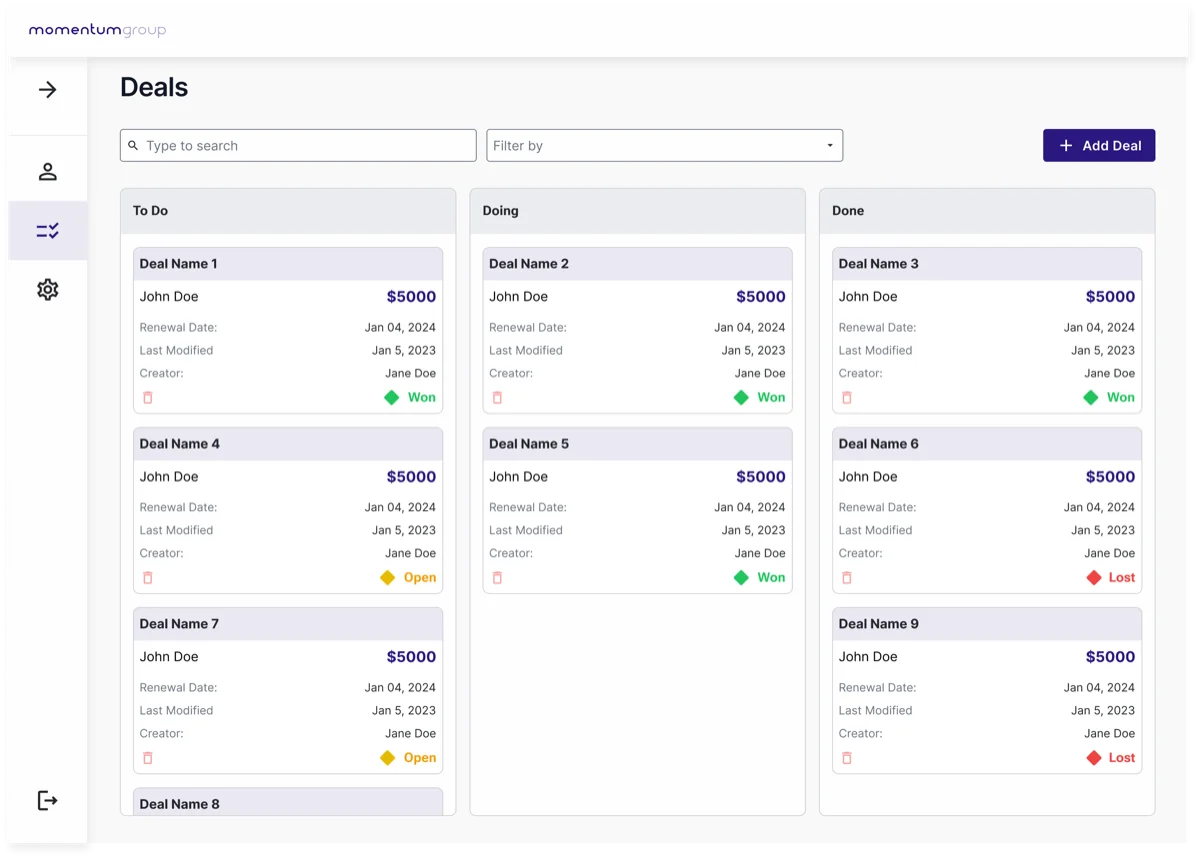 The build’s final exam: a kanban deal pipeline. Every drag between “To Do”, “Doing” and “Done” is a relationship update — which is exactly why a wrong data model turns drag-and-drop into agony.
Try it yourself
Model a business you know on one page: nouns → types, facts → fields, draw lines for relationships and label their direction. Then stress-test it with three real questions (“deals per person this month?”). If answering means string-matching or double-storage, normalise and redraw. One hour, honestly done, beats a month of tutorials.
This skill in the AI era
Here’s the sentence we say most often to clients: AI writes code, but it doesn’t own your data model. Claude Code will implement whatever schema you bless — brilliantly and instantly — which makes the blessing the whole job. Data modelling is the single most transferable skill from the Bubble era into AI-assisted development, bar none. It’s the first artefact in every AI build we scope and the first thing we inspect in a rescue. Why the skills carry over.
If this sparked something, let's talk.
No pitch, no pressure — just a conversation about what you're working on.
Let's talkRelated posts
Bootcamp
A simple approach to data modelling
A four-step method for designing a database schema: identify entities, map relationships, choose fields. Taught through the CRM data model built in Bubble.
Bootcamp
API calls as actions vs data (and the planning checklist)
When to use Bubble API calls as actions versus data sources, a one-to-many auth pattern, and the planning checklist that keeps integrations from failing silently.
Bootcamp
Module 5 — Application architecture: pages, states and reusable pieces
Single-page vs multi-page apps, URL parameters, custom states, reusable elements — and a big practical building a main template with an expanding navigation drawer.