Legacy
Ten features that would make Bubble.io unbeatable

Photo by wallace Henry on Unsplash
Photo of random old bits of technology that haven’t stuck around. You’re unlikely to see Bubble here, as long as they keep moving ahead! Photo by Lorenzo Herrera on Unsplash
Introduction
Bubble is good. Almost unbelievably good.
You can deploy a custom web app in 20–40% of the time it takes to build an app with a full-stack dev team from scratch.
This isn’t hard to sell.
Because of this, I’ve built my business on Bubble which has scaled from 1 to 25 full-time team members building apps for clients using Bubble in 15 months (momentumgroup.tech). Some of my clients have raised millions in capital or are projecting the same in revenue.
You could say I am a serious fan.
Good to great
But there are a few things that Bubble should do next to make it truly unbeatable.
Now the Bubble founders are to be applauded for their vision. They have truly done the hard work to get to where we are now. Building a business on Bubble is many times easier than building Bubble. However, this is only the beginning. It’s time to scale this!
Yes, Bubble founders and investors… I’m looking at you 😉. I’ve captured the requirements of well over 100 potential clients at length — my clients are Bubble’s clients. I’ve built over 20 substantial projects on Bubble, some with over 1,000hrs invested into them.
I know the pain points. I know the limitations. I pitch Bubble all the time and it’s me who tells people “this is” or “this isn’t” the tool of choice for your product. As a result, I’ve got some ideas to get Bubble from the present state to an exponentially more adopted solution.
To go from a little-known indie-hacker tool to a global democratiser of technology, Bubble needs to do these things.
1. Boilerplate Apps
So many projects are the same at the core. Two-sided marketplaces. CRM tools. SAAS. Everyone thinks their idea is unique. But they are mostly the same.
So… create a few ‘Bubble Made’ off-the-shelf boilerplate projects that reduce dev time from 20–40% to 5–10% of full-stack dev. Totally possible. Then build training and sales around these apps.
The current Template ecosystem doesn’t have this covered to an adequate quality standard. The UX/UI design and technical architecture are lacking. What can you expect for $300?
A good boilerplate CRM combined with some of the things below would slowly but surely begin to eat away at Salesforce’s market — whose clients keep saying to me “we spend hundreds of thousands EACH YEAR for something that only does 80% of what we need”.
Bubble has the advantage here…. it is fully customizable, and much more affordable, but not enough companies have realized this yet because it needs to be easier to get to the outcome quickly. There are simply not enough professional Bubblers who can make this a reality for all the companies who would buy it. But much of this could be covered by better templates and training.
All apps have an Account functionality and many have Messaging, Notifications, and Settings. These Boilerplate apps would undoubtedly have many of these common features that don’t need to be reinvented for every app. Built to a professional standard. Easily customizable.
2. Multi-region support
Enable users to deploy the app’s database into different AWS regions and don’t be so USA-centric. I’m sure this isn’t lost on Emmanuel (CEO) given his French heritage, but many enquiries for quasi-enterprise apps require data to be hosted within a specific geographical location, or multiple locations. Right now hosting Bubble in Europe, Australia, Canada, etc will cost over $2,000 USD per month, last time I spoke to Support about a Dedicated plan.
Bootstrapping founders selling to enterprise have stronger business models with more potential revenue than bootstrapping founders selling to consumers, and so multi-region support would give Bubble access to customers that would pay multiples of their current pricing. One app with a backend in two regions is tricker again, but is another requirement that has come up repeatedly.
3. Support for ISO27001 and HIPAA
Same as multi-region support, native support for common IT certifications would open the door to better customers in industries that are quite happy to pay for the privilege. Cha-ching for Bubble!
While you’re at it, perhaps ditch niche ideas like the Algolia integration that only works on tables with no privacy rules, and instead build integrations with subprocessors that work with these stringent standards. Data and logs encrypted at rest and only accessible to a developer via some kind of key system would be required.
4. Mobile App Support
Find a way to make this part of the process seamless and easy. While extending into the native mobile realm is another product in itself, it would be an exceptionally valuable complement to what Bubble has done already. Throw in some offline storage capabilities into the mix…boom!
Improved code-management features
Bubble is aimed at citizen developers — those without training in software engineering. But to extend the time people can stay on Bubble (who incidentally would be paying for a higher-priced plan), Bubble needs more features that resemble a traditional dev environment.
Once apps get complex, they are difficult to navigate and maintain in the current Bubble interface, even if you really try hard to keep them organized in a way that resembles traditional development.
The remaining 6 ideas would help Developers keep people on Bubble forever:
5. Centrally maintained expressions and functions
Bubble makes ‘Don’t repeat yourself’ somewhat difficult when it comes to complex queries of the database. While there are reusable elements and option sets, there is nothing like this for expressions.
All of your complex business logic (via expressions) becomes spread haphazardly throughout the user interface and workflows. Even with the best planning and intentions, maintenance and handing over apps can be a nightmare.
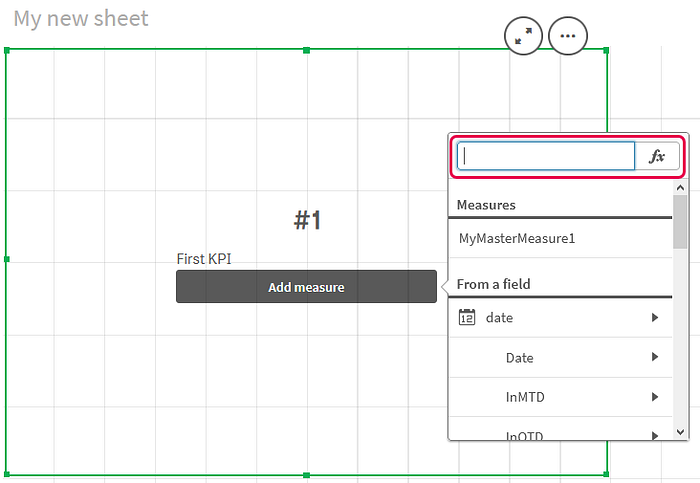
Master expressions concept from QlikSense
A centralized repository of database searches (‘Do a search for’) — much like Option Sets — would increase code quality, reduce repetition and remove the possibility of making simple mistakes (for inspo, see QlikSense’s Master Items concept above).
Get Will Ericksson’s stories in your inbox
An extension of this would be the ability to write your own functions and deploy them throughout the app using dynamic expressions. Welcome to reusable or master expressions!
We are currently thinking about all kinds of slightly-ugly workarounds for this problem right now, but Bubble could fix this problem upstream for us.
6. App versions and merging
The concept of Versioning is present in Bubble but we are yet to have confidence in the Merging ability. It isn’t clear what is/isn’t merged, and there have been Bugs when merges have been performed.
This limits the number of devs who can work concurrently to very small teams and removes the advantage of upgrading to the Professional or Production plan to gain more dev versions (one of the main reasons you should want to upgrade).
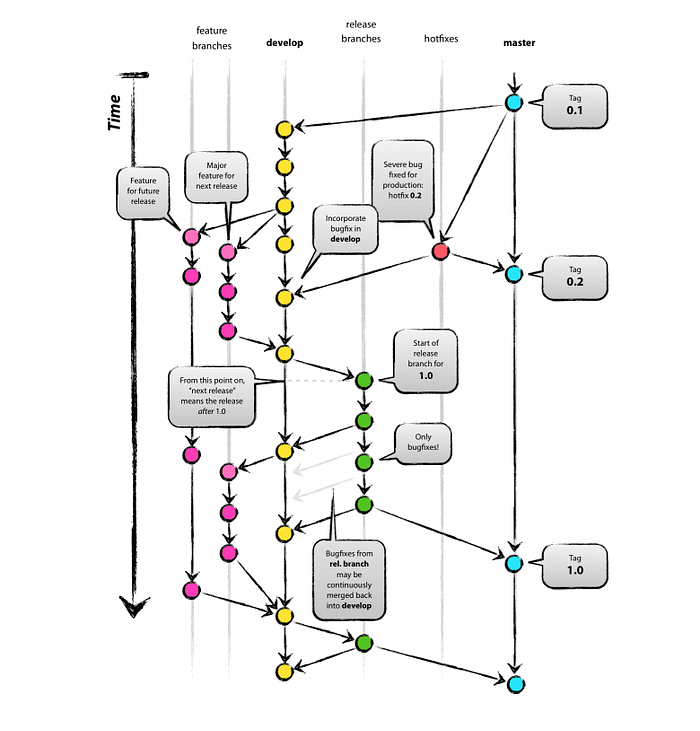
This is what a Git model might look like in traditional code (Image Source: https://nvie.com/posts/a-successful-git-branching-model/)
Better visibility of changes, as well as the ability to accept changes in one version or the other — with GIT-like functions such as checking out and checking in the code, as well as precise rollbacks, would do this nicely. Finally, more space to describe the changes made to the app in say a Changelog visible to the App’s Users would be a nice addition.
On this note, Bubble’s own changelog could use more detail — often it isn’t clear what is meant when changes are made to Bubble’s codebase.
7. Auto-documentation of the database and workflows
I’d love to see an autogenerated entity-relationship diagram, as well as better visualization of complex workflows — especially backend workflows that reference each other. I will map these out manually in Lucidchart which is time-consuming, but this could all be generated from metadata. Importing and exporting database structure and styles would also be a nice touch.
The Comments feature is OK, but perhaps adding rich text, and also the ability to view all comments for a file and improve the way the Comments are shown alongside and within the Editor UI would make documentation more streamlined.
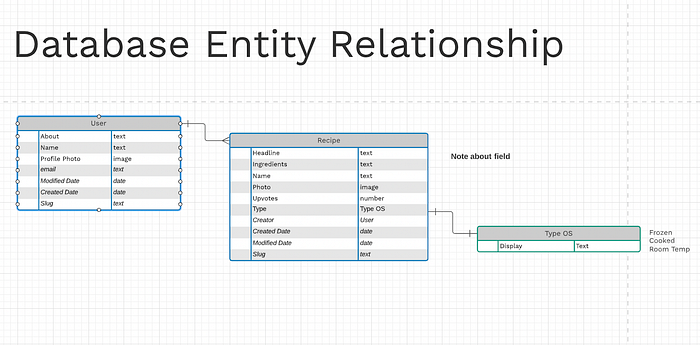
We make entity-relationship diagrams for all our Bubble apps!
8. Exposing Schedule, Logs, and Files as Tables within the App
I constantly create my own tables for Scheduled Events and File Management. Why not save me the hassle and expose these tables to me as though they were part of my database tables? Unless I make these tables, my App’s users cannot manage their own Events or Files after they are created.
I also make my own Audit Logs. We log page views including IP addresses, browser data, and URL parameters. We also log unhandled errors and Create, Update and Delete on key data tables. We do use Audit Logs within the App as well.
9. Bulk Database Operations
One of the biggest challenges is the inability to run bulk operations on the database. There is currently no way to run the following SQL query on a large table without iterating row by row. These kinds of queries should not be computationally expensive, so it isn’t clear why Bubble restricts them.


The rest of the SQL-like engine of Bubble is very good, but this limitation means we have to revert to recursive API calls that iterate through the data row by row, taking time and consuming system resources — rather than performing this basic SQL statement that is available to Bubble’s underlying SQL database but not exposed to the Bubble Developer.
10. Design editor zoom out
I love Figma and especially the way you can Zoom Out and view the whole flow of an App. Imagine if you could interact with the design tab like Figma and Zoom-Out to see the whole app, including:
- One page expanded into all possible combinations (e.g. with popups, without popups, with various groups showing and hiding) alongside each other
- All the pages of the app
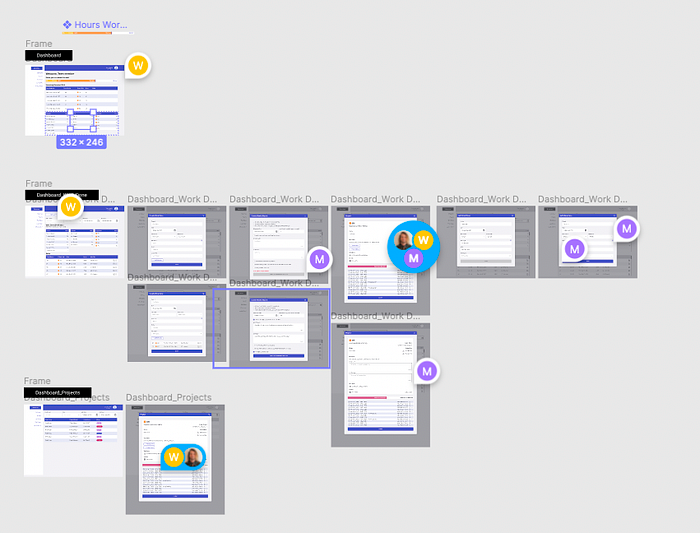
Figma view of some Pages with Modal / Popups
Ok, now I know this one is ambitious and is probably the lowest priority on my list, but it would be really cool.
Sell the vision!
1.6 million users isn’t bad, but the Bubble vision has so much further to go.
I’m certainly not advocating for pricing increases as a customer, but many of the above features could result in Bubble being able to charge more in line with the value that it creates for customers.
Bubble should invest more in sales and build stronger partnerships with Agencies that have the skills to maximize the potential of Bubble for their clients, overcoming the objection of “I want it but it’s too hard”.
In this case, I believe it is the sales and marketing that need to increase in line with the quality and potential of the product (many worse products have been many times more successful).
Conclusion
The bottom line is that Bubble needs to both expand its audience into higher-value markets and extend the amount of time people can spend using Bubble as the platform behind their product.
Bubble is really really good right now, but it could become truly great with these investments in the next few years.
Will is the Managing Director at Momentum Group and founder of Momentum Academy.
More at willericksson.com.
Where this story went
We spent five years mastering Bubble. Now we build with AI.
Momentum was one of the world's leading Bubble.io agencies — that's why we wrote this article. These days we build and migrate the same kinds of products with Claude Code: real, portable code your own team can amend with AI. If you're weighing up a move off Bubble (or any platform), we've made the journey ourselves.
Related posts
Legacy
**What a Founder’s 1,500-Prompt Failure Taught Me About AI and Vibe Coding**
Recently I had a call with a founder who was looking for advice about building with Bubble.io. He came to me after experimenting with vibecoding , an emerging…
Legacy
In the brave new world of AI coding: Why we’re doubling down on Bubble.io in our agency/venture studio.
Introduction Tool obsession It’s 2025. There’s lots of excitement/hype about generative AI and coding. There’s also a small ocean of opinions about the various…
Legacy
Why Learning Bubble Still Matters in the Age of AI
If you’ve been curious about building apps with Bubble.io, you’ve probably asked yourself at least once: “Isn’t AI going to do all of this for me soon?” It’s a…